

How to Start Meditation (Even If You Don’t Know Where to Begin)
Not a practice to master. A space to return to.
There is a moment most people are looking for.
Not clarity.
Not peace.
Just a brief pause where the noise settles enough to hear themselves again.
Meditation often feels like the answer.
But the way it’s presented—structured, disciplined, time-bound—can make it feel distant.
The truth is simpler.
You don’t begin with meditation.
You begin with making space for stillness.
Start Where You Are, Not Where You Think You Should Be
You don’t need a perfect morning routine.
You don’t need silence, or experience, or even belief.
Just a place to sit.
It could be the corner of your bed.
A chair near a window.
A small surface that feels like your own.
Over time, even a simple setup begins to matter.
A tray you return to.
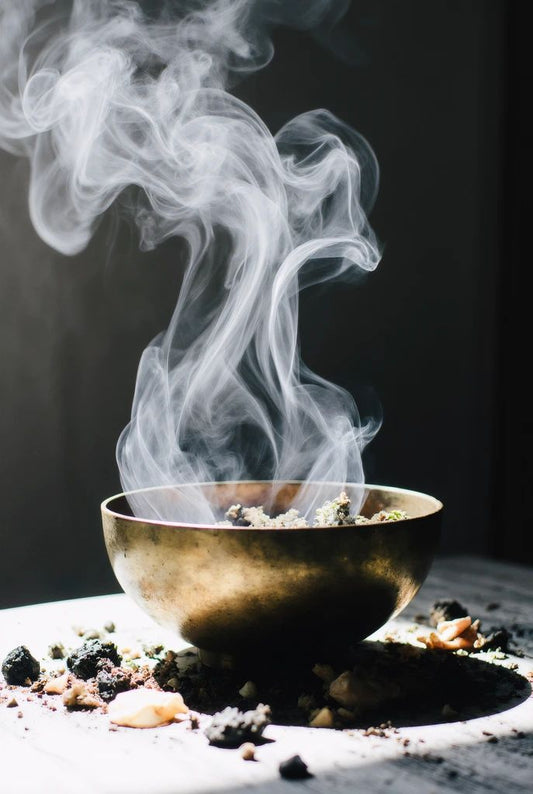
A familiar scent in the air.
A few objects that stay where they are.
Not because they are necessary—but because they make the moment easier to enter.
Create a Subtle Shift in the Space
Stillness doesn’t always come from within first.
Sometimes, it begins with the environment.
A soft incense, made from natural plant blends, can change how a room feels within seconds—less sharp, more settled.
A light mist in the air can create a sense of freshness, like something has gently reset.
These are not rituals.
They are signals.
Over time, your body begins to recognise them.
You sit down, the scent is familiar, and something in you softens without effort.
Sit Without Trying to Get It Right
There is no perfect posture.
Sit in a way that feels supported and natural.
Your hands can rest on your lap, or lightly together.
Your shoulders relaxed.
Your face at ease.
This is not about control.
It’s about allowing your body to stop holding unnecessary tension.
Bring Your Attention to the Breath
Not to change it.
Just to notice it.
The inhale.
The exhale.
If you want a gentle structure:
- Inhale slowly
- Exhale slightly longer
Longer exhales are known to activate the body’s calming response¹.
But even without technique, your breath is enough.
It’s always there.
It’s always returning.
When the Mind Wanders (And It Will)
You’ll think about:
- Work
- Conversations
- Random memories
- Things you didn’t expect at all
This is not a problem.
This is the process.
Each time you notice you’ve drifted, and come back—that’s the practice.
If it helps, you can hold something simple in your hand.
A bracelet.
A bead.
A small stone.
Not as a tool, but as a point of return—something that keeps you gently anchored when your attention moves.
Start Small. Stay Consistent.
You don’t need long sessions.
Start with:
- 3 minutes
- Then 5
- Then maybe 10
Research shows that even short, consistent mindfulness practices can reduce stress and improve emotional regulation over time².
The key is not duration.
It’s repetition.
Let the Moment End Slowly
Before you open your eyes:
- Take one deeper breath
- Notice how your body feels
- Notice the space around you
Don’t rush out of stillness.
Let it carry forward, even if just a little.
Where Products Fit Into This (Without Taking Over)
You don’t need anything to meditate.
But certain things can make it easier to return, especially in the beginning.
- A natural incense or camphor blend can clear the heaviness of a space and mark the start of a pause
- A space-cleansing mist can reset the room when the day feels dense or scattered
- A small object—like a crystal or bracelet—can become something your hands instinctively reach for when you want to ground yourself
- A dedicated surface or tray can quietly hold these elements, so the space feels consistent
Over time, these don’t feel like additions.
They feel like extensions of the practice.
AUM Living — Not a Ritual, A Way of Living
There is a quieter way to approach all of this.
Not through strict routines or rigid definitions.
But through small, repeatable moments of awareness.
AUM Living sits in that space.
It doesn’t ask you to step away from your life.
It gently reshapes how you move within it.
A scent that shifts your mood.
A surface that invites you to pause.
An object that holds your attention when your mind feels scattered.
Nothing loud.
Nothing excessive.
Just thoughtful elements that make stillness feel more accessible—more natural, more human.
A Simple Way to Begin Today
If everything feels like too much, reduce it to this:
Sit.
Breathe.
Notice.
Return.
That’s all.
No performance.
No expectation.
Just a small moment of coming back to yourself.
And then, tomorrow, you do it again.
Tags:
Related articles

-
Apr 04 2026
Morning Sankalp Ritual

-
Apr 04 2026
How to Cleanse Your Home
-
Apr 03 2026